
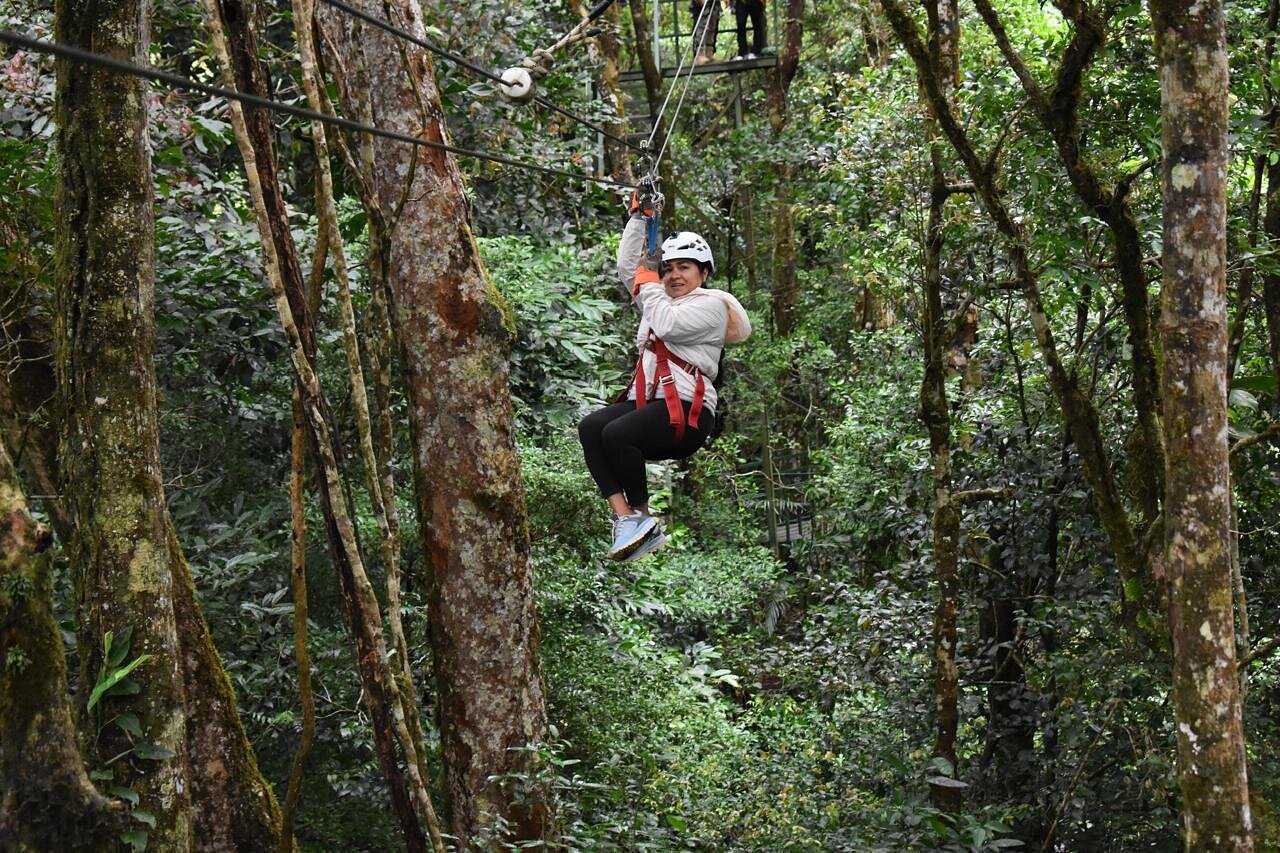
Ziplining in the Costa Rica rainforests feels worth it the moment the forest opens beneath your feet and the ground stops feeling like the center of the experience.
Most travelers arrive with the same quiet questions. Is it safe? Is it too extreme for beginners? Will it feel like real rainforest immersion or just another tourist activity?
The truth is simpler. Ziplining here is not about courage. It is about access. Access to cloud forests, coastal rainforests, and canopy layers that cannot be experienced from walking trails alone.
Once the first line begins, hesitation does not disappear. It just stops leading the experience.
What replaces it is focus, curiosity, and a strange calm that only exists when you are suspended above a living rainforest.
What is Ziplining in Costa Rica Rainforests Like?
Ziplining in Costa Rica rainforests is a guided canopy experience where travelers move across steel cables suspended above dense jungle and cloud forest ecosystems. It combines movement, elevation, and natural immersion in a way that lets you experience the rainforest from inside its canopy layer rather than the ground.
Most tours are designed for beginners. They use engineered safety systems, trained guides, and progressive lines that gradually build comfort before moving into longer and higher traverses.
It is not about speed. It is about perspective.
Costa Rica Rainforests: The First Glide That Changes Everything
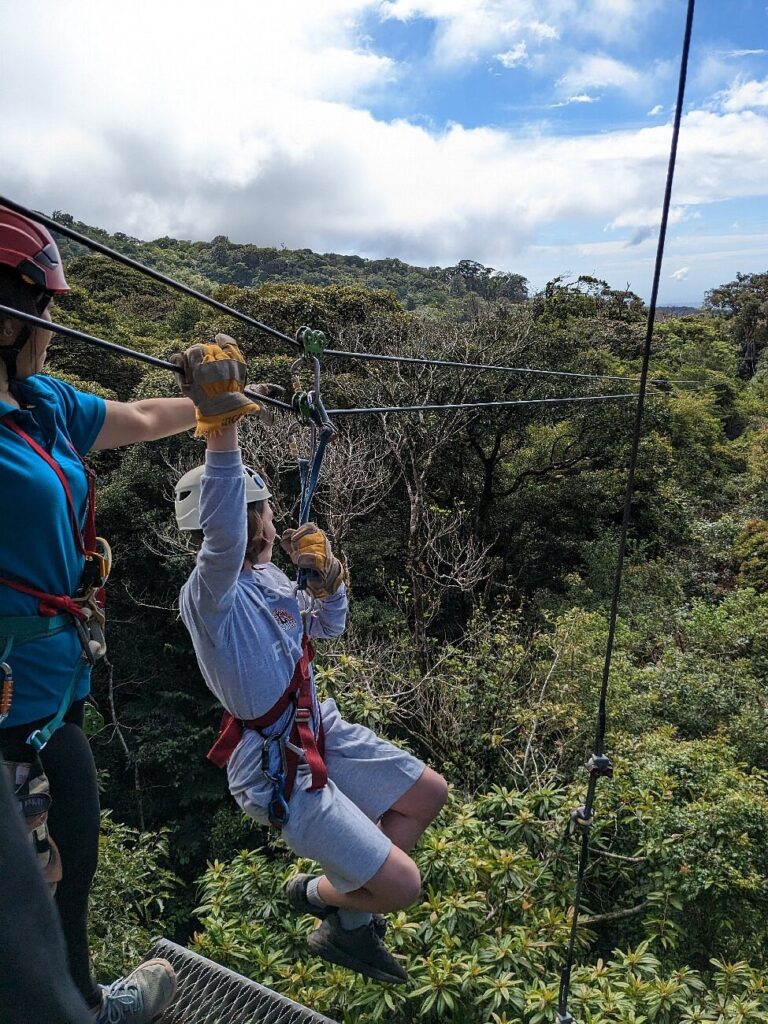
The first platform is where hesitation feels the strongest. Harness clipped, hands slightly tight, and a short instruction from the guide that sounds simple but feels heavier in the moment.
Then the push forward happens.
The first glide across the Costa Rica rainforest canopy is rarely fast. It begins gently. Then the forest shifts beneath you. Trees stop feeling like barriers and become layered depth instead of a solid structure.
The ground fades into texture instead of distance.
This is the moment where most first-time visitors stop thinking about fear and start noticing the rainforest itself.
You begin to see:
- The canopy moves in rolling layers instead of flat green walls
- Light filters differently under dense rainforest cover
- Sounds stretch and echo between treetops
- Fear fades faster than expected once motion begins
This is the first unreal moment. Not because of adrenaline, but because the rainforest stops feeling distant.
Costa Rica Rainforests Safety and What Beginners Should Know
One of the biggest decision points before booking is simple. Is ziplining in Costa Rica safe for beginners?
The answer is yes, but the reason matters more.
Most canopy tours in Costa Rica’s rainforests are engineered systems built for controlled movement. They include:
- Steel cable systems tested for repeated load
- Dual safety harness attachments
- Controlled braking mechanisms
- Trained guides managing every launch and landing
At operators like The Original Canopy Tour, safety is not an added feature. It is the foundation of the entire experience.
Most beginner concerns are predictable:
- “Is it too high?” → progression builds confidence step by step
- “What if I freeze mid-air?” → guides control timing and flow
- “Do I need training?” → no prior experience required
- “Is it physically hard?” → light walking and basic climbing only
Most hesitation disappears within the first two lines. The mind adjusts faster than expected once movement begins.
Monteverde Cloud Forest and The World’s First Canopy Experience
Monteverde is where ziplining stops feeling like a ride and starts feeling like a system built into nature itself.
At Canopy Tour Monteverde – Finca Valverde, part of The Original Canopy Tour, the experience is not a single zipline but a full canopy journey inside the cloud forest.
This is also where modern canopy tourism began.
In 1994, deep in Monteverde, the world’s first canopy tour was created. It later became The Original Canopy Tour, a registered trademark and the foundation of modern canopy experiences worldwide. The idea was not only adventure, but connection: creating a way for people to experience the forest canopy while supporting conservation and protecting fragile ecosystems.
Here, the experience is built around movement variety, not just speed.
You do not just zip. You:
- Traverse long canopy cables
- Swing across open forest gaps
- Descend controlled vertical drops
- Climb inside a massive living fig tree structure
Each moment feels different, almost like the forest is testing how you move through it rather than how fast.
The most surprising part is not adrenaline. It is a rhythm.
One moment, you are suspended in misty silence. The next you are gliding above layered green valleys. Then you are standing inside a living tree structure, realizing the forest is not beneath you. It is surrounding you.
This is where many travelers ask a quiet question:
Is this still ziplining, or something closer to rainforest immersion?
Costa Rica Rainforests: Tarcoles and the Coastal Jungle Shift
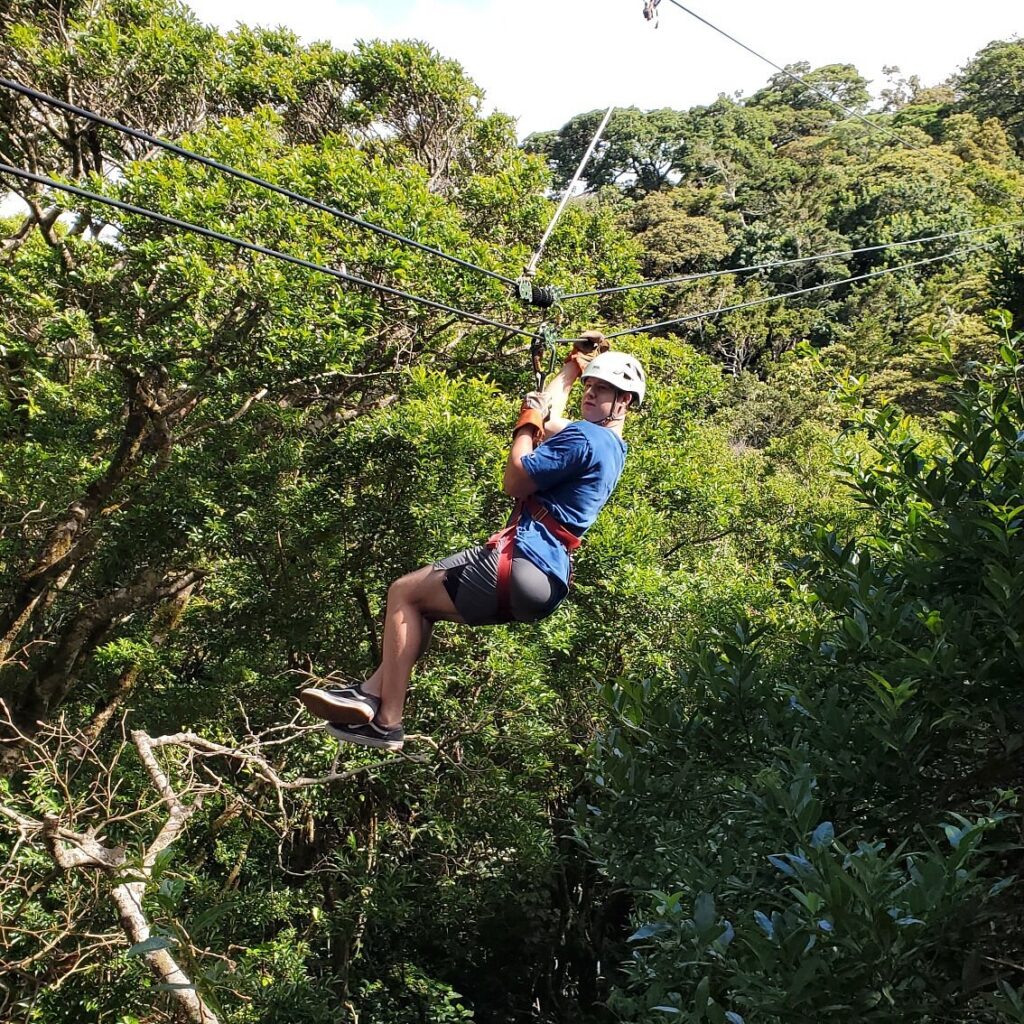
The experience changes again near the Pacific coastline.
At Nosovar – Tarcoles canopy experience from The Original Canopy Tour, the rainforest becomes warmer, denser, and more connected to coastal ecosystems.
This is not cloud forest altitude. This is a lowland rainforest, where wildlife presence feels closer, and the jungle feels more alive in every direction.
Tarcoles is known for its river ecosystem and biodiversity, especially birdlife and wetland connections. That changes the experience from elevation-focused adventure to immersion in a living tropical system.
Moments that define this region include:
- Gliding through dense tropical corridors with limited ground visibility
- Spotting birds crossing canopy gaps mid-flight
- Hearing river systems blend with forest wind patterns
- Landing in open jungle clearings that feel untouched
This is where travelers realize something important.
Costa Rica’s rainforests are not one environment. There are multiple ecosystems connected through canopy movement.
Ziplining becomes the thread that links them.
The Mid-Air Shift from Fear to Awareness
Every zipline experience has a turning point. It usually happens mid-line.
At first, the body resists, grip tight, eyes forward, and focus on landing. Then something changes. The mind realizes there is nothing left to control. That is when fear stops, and awareness begins.
Instead of thinking about height, attention shifts to the rainforest itself:
- How far does the canopy stretch beyond sight
- How quiet the movement feels above the trees
- How wind direction changes mid-ride
- How stable is the system actually
This is the moment most visitors remember later. Not the start. Not the landing. But the suspended middle where everything feels still while moving.
Many people describe it as unexpectedly peaceful.
When to Visit Costa Rica Rainforests for the Best Ziplining Experience
Timing changes the experience more than most travelers expect. The Costa Rica rainforests shift between dry and green seasons, and each creates a different version of the experience.
- Dry season (Dec to Apr): Clearer skies, sharper visibility, easier canopy views
- Green season (May to Nov): Denser rainforest atmosphere, richer color, more dramatic scenery
Morning tours usually feel smoother. Winds are lighter, and visibility is better before afternoon cloud buildup. But the rainforest does not follow fixed rules. It changes daily. Sometimes hourly.
That unpredictability is part of what makes the experience feel alive.
Choosing Your Ziplining Experience Before Booking
Not every ziplining experience in the Costa Rica rainforests feels the same. The difference is not just location, but how the entire experience is structured around comfort, intensity, and immersion.
Before booking, most travelers quietly ask one question. Which experience should I choose?
The answer becomes clearer when broken down by style:
- Monteverde (Finca Valverde – Canopy Tour Monteverde): best for full cloud forest immersion, long traverses, Tarzan swing, rappel, and tree climbing inside misty high-altitude rainforest
- Tarcoles (Nosovar coastal experience): best for wildlife viewing, warmer rainforest conditions, and a stronger coastal ecosystem feel
- First-time zipliners: best suited for guided canopy systems like Canopy Tour Costa Rica, where progression is structured, and confidence builds step by step
It is not about which is better. It is about which version of the rainforest experience matches the memory you want to take back.
Some travelers want altitude and mist. Others want wildlife and density. Many simply want a safe, structured introduction to rainforest canopy travel.
Once that choice becomes clear, the experience stops being uncertain and starts becoming something to look forward to.
Costa Rica Rainforests: 8 Ziplining Moments That Feel Unreal
After the harness comes off, the experience does not end. It breaks into fragments that return later without warning.
The moments that usually stay are:
- The first slow glide above an endless green canopy
- The Tarzan swing drop in Monteverde
- The silence between zip lines, where the forest feels louder
- The floating sensation above Tarcoles’ dense jungle corridors
- The mid-air shift from fear to calm awareness
- The contrast between cloud forest mist and coastal heat
- The inside-the-tree climb that breaks expectation completely
- The final landing, where everything feels unusually still
These are not just adventure moments. They become reference points that reshape how the rainforest is remembered.
Because Costa Rica’s rainforests are not meant to be observed only. They are meant to be crossed in motion and between the ground and the sky.
Once that shift happens, the question is no longer whether ziplining was worth it. It becomes something simpler:
What changes in how you see a place when you stop looking at it… and start moving through it?