
A Costa Rica itinerary for 7 days works best when it stops trying to cover everything and instead follows how the country feels on the ground. Distances look short on a map, but roads bend through mountains and weather changes without warning. Travel time quietly stretches your plans.
Most travelers figure this out after day one.
The route that consistently works is simple: San José → Arenal → Monteverde → Manuel Antonio → San José. It doesn’t chase every region. It focuses on the ones that actually change your experience as you move through them.
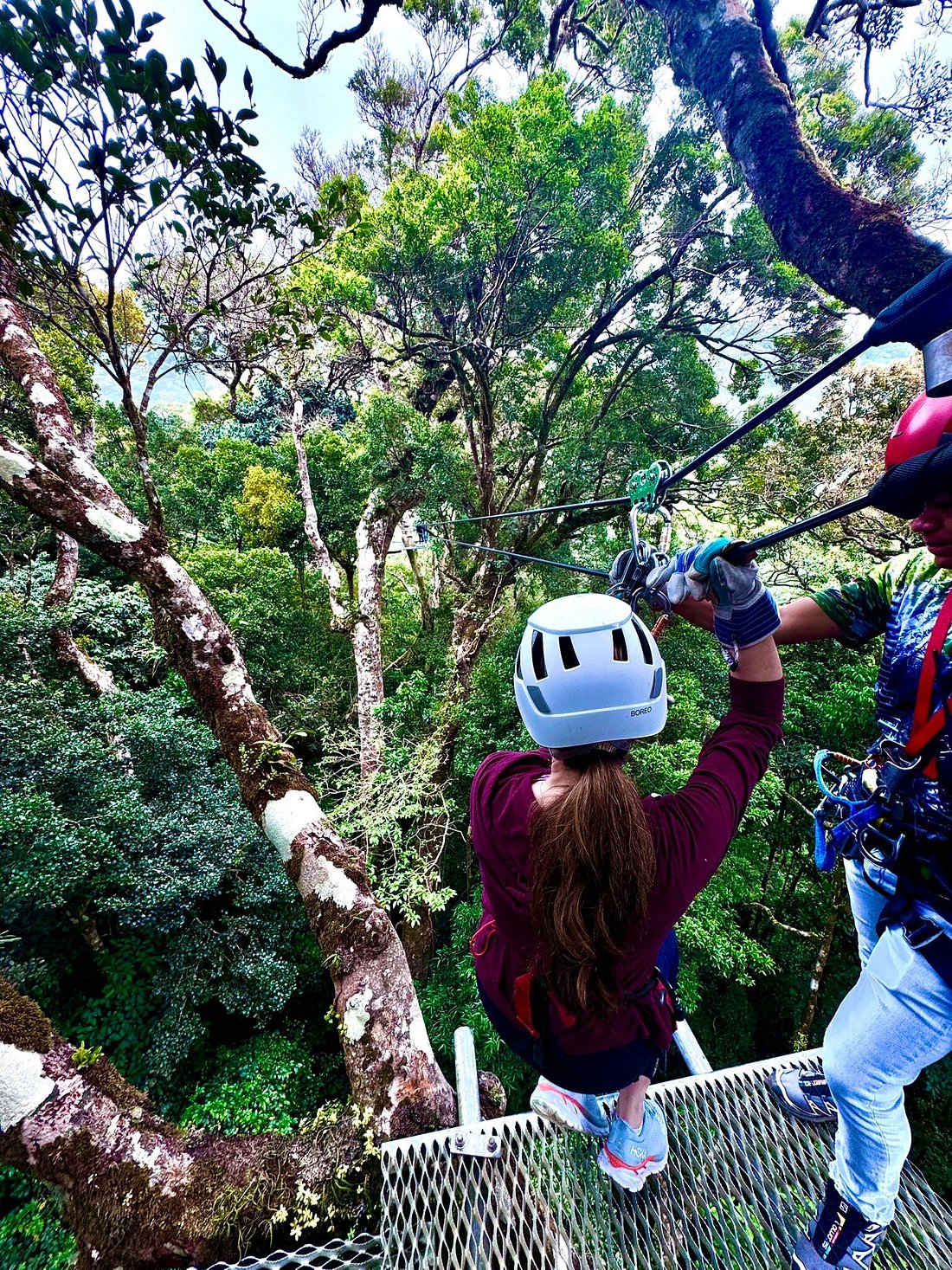
Somewhere inside that movement, canopy tours become part of the experience. They do not feel like an added activity in the itinerary. They feel like a natural part of the landscape and the way you explore it.
Why This Costa Rica Itinerary Works Best
A lot of first-time itineraries collapse because they try to squeeze in too much. Tortuguero, La Fortuna, Monteverde, Manuel Antonio, Caribbean beaches all in one week. It sounds exciting until you realize half the trip becomes driving. This version slows that down without making it boring.
It sticks to three environments that feel completely different from each other:
- Volcano country around Arenal
- Mist-heavy cloud forests in Monteverde
- Coastal rainforest and beaches in Manuel Antonio
What makes this flow work is the contrast. You’re not repeating scenery. You’re stepping into entirely different climates every couple of days. That’s what makes a Costa Rica itinerary 7 days feel complete without feeling rushed.
A Quick Reality Check on Driving
Travel in Costa Rica is not hard, but it is rarely fast. Even short distances stretch out.
Typical travel times:
- San José to Arenal: around 3–3.5 hours
- Arenal to Monteverde: 3–4 hours, slower mountain roads
- Monteverde to Manuel Antonio: 4–5 hours
- Manuel Antonio back to San José: roughly 3–3.5 hours
These are not highway drives. They are scenic, winding routes where progress feels slower than expected. Planning around this reality is what keeps the trip enjoyable instead of exhausting.
7 Days Costa Rica Itinerary
Day 1: Landing in San José → Straight to Arenal
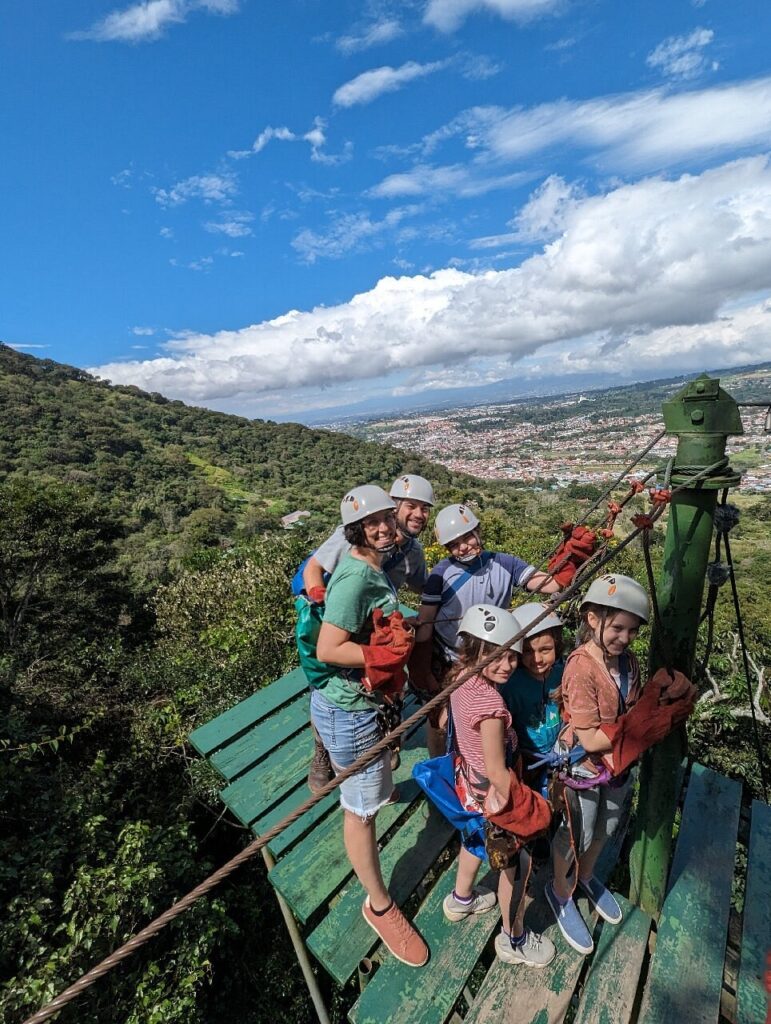
Most international flights land in San José. The instinct is often to rest in the city, but the better move for a 7-day trip is to continue straight toward La Fortuna.
The drive gradually shifts from urban edges to open countryside. Small roadside towns appear. Then the land starts rising, and if the weather cooperates, Arenal Volcano appears in the distance. It doesn’t feel dramatic at first. It just appears. That moment usually resets the pace of the entire trip.
Once in Arenal, the day should stay light:
- Check into a rainforest lodge or hotel
- Visit natural hot springs in the evening
- Eat a simple local meal (casado shows up everywhere for a reason)
No need to overpack this day. The real start is the next day.
Day 2: Arenal Canopy Tour + Rainforest Experience
This is where Costa Rica shifts into what most people imagine before arriving.
Arenal is one of the strongest canopy tour regions in the country. The forest here feels layered and alive, with rivers cutting through deep green valleys and volcanic terrain sitting in the background.
A question that comes up often is whether ziplining here is beginner-friendly.
In most cases, yes. The system is structured. Guides walk you through everything before the first line. There’s repetition, safety checks, and controlled progression through the course. It feels more guided than risky.
Costa Rica actually helped define modern canopy tourism. In 1994, The Original Canopy Tour built the world’s first structured canopy tour system in the country. That early work didn’t stay local. It influenced how zipline systems were designed globally.
Today, we operate behind adventure systems in more than 40 locations across 14 countries. We focus on how tours are built rather than just how they are run.
Our approach is built around:
- Safety integrated into system design, not added later
- Guide training that goes beyond 270 hours
- Long-term environmental planning
- Operational consistency across locations
- Standards that exceed basic certification requirements
You can check out our tour details here!
After ziplining, Arenal doesn’t slow down. There’s still time for:
- La Fortuna Waterfall
- Volcano viewpoints and lava trails
- Another round in the hot springs if the body needs it
Day 3: Arenal at a Slower Pace (Wildlife + Exploration)
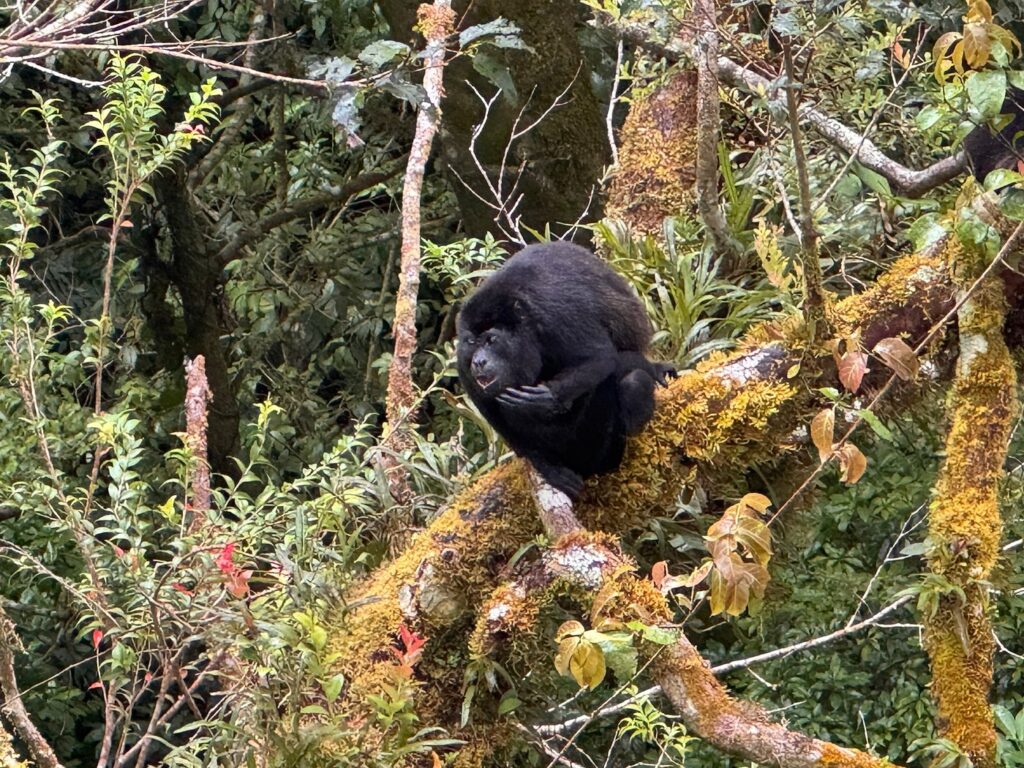
After the adrenaline of ziplining, this is the day where things naturally calm down. Costa Rica doesn’t guarantee wildlife sightings, and that unpredictability becomes part of the experience. Some mornings feel incredibly active. Others stay quiet for long stretches.
Early hours usually offer the best chances:
- Sloths resting in treetops
- Monkeys moving through canopy layers
- Toucans crossing open gaps in the forest
- Frogs and small reptiles near water trails
Hanging bridges walks often become the most balanced activity here — not too intense, but visually rich.
Other slow options in Arenal:
- Coffee and chocolate tours
- Lake Arenal viewpoints
- Light guided nature walks
Nothing here needs to be rushed. That’s the point of staying an extra day in this region.
Day 4: Arenal to Monteverde (Where the Air Changes)
The drive to Monteverde feels short on paper but longer in reality.
As elevation increases, the air cools down. Windows fog slightly. The forest begins to shift from dense rainforest to something softer, quieter, more suspended. Monteverde doesn’t feel like a continuation of Arenal. It feels like a transition into an entirely different ecosystem.
Once in Santa Elena, the rest of the day usually settles into:
- Coffee shops with slow pacing
- Small-town streets
- Early rest before cloud forest activities
Monteverde rewards people who don’t rush into it.
Day 5: Monteverde Canopy Tour + Cloud Forest Immersion
If Arenal is about volume and views, Monteverde is about atmosphere.
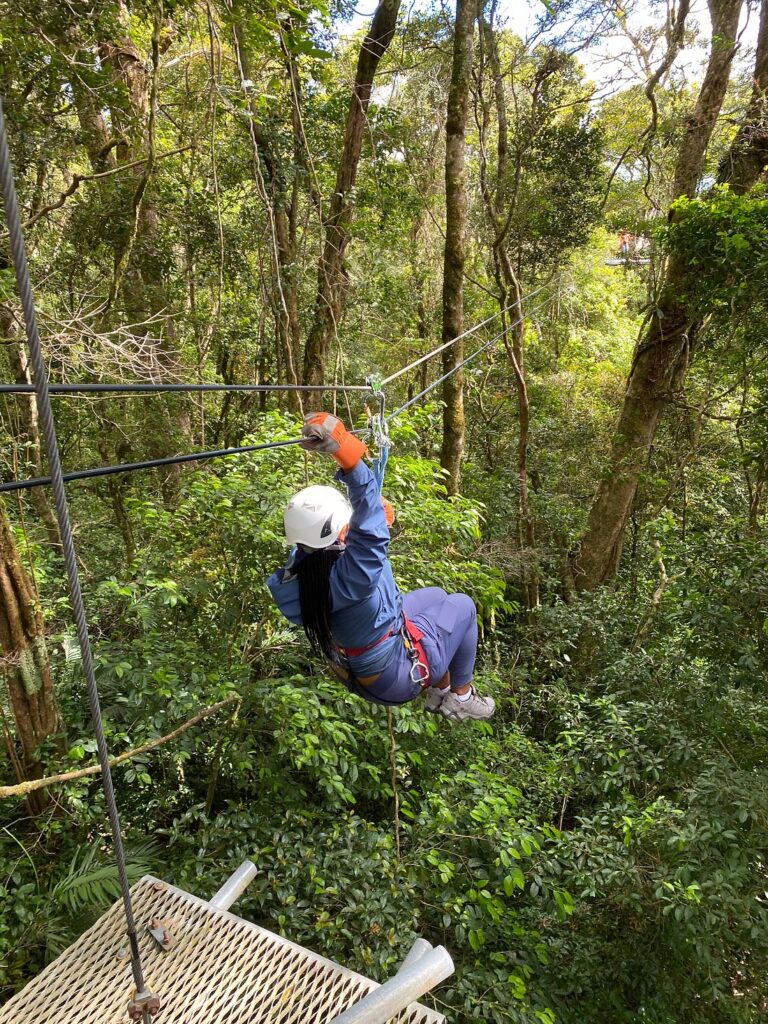
Ziplining here feels different immediately. The lines move through cloud forest instead of open rainforest, which means visibility changes constantly. Fog rolls in and out. Trees disappear and reappear.
It’s less about speed. More about being inside the forest while moving through it. This is also why many travelers end up comparing both canopy experiences instead of choosing one.
They don’t feel similar at all. Beyond ziplining, Monteverde usually includes:
- Cloud forest reserve trails
- Hanging bridges through mist
- Occasional rare bird sightings if timing is right
Day 6: Monteverde → Manuel Antonio (Coast Shift)
This is the longest travel stretch in the itinerary, but also the most visually noticeable change. The road slowly drops from mountains toward sea level. The air becomes warmer. Eventually, the Pacific coastline appears, and the whole pace of the trip shifts again.
Manuel Antonio feels immediately different:
- Humid coastal air
- Dense jungle meeting the ocean
- Slower movement overall
Evening is best kept simple:
- Beach walk
- Sunset viewing
- Fresh seafood without a plan
No structured activity needed here.
Day 7: Manuel Antonio National Park + Return
Manuel Antonio National Park is small, but unusually dense in wildlife. It’s one of the few places where rainforest trails and beaches exist side by side.
Common sightings include:
- Capuchin monkeys moving close to trails
- Sloths resting in low branches
- Iguanas in open sun areas
- Coastal bird species near water edges
Morning is the best time to enter before heat and crowds build. After the park, the return journey to San José begins for departure.
Mid-Range Travel Cost Breakdown (Approx)
- Hotels: $100–200 per night
- Car rental: $50–90 per day
- Canopy tours: $50–100 per experience
- Food: $30–60 per day
- Parks: ~$20 per entry
Costs vary, but Costa Rica generally rewards mid-range planning more than ultra-budget rushing.
Final Thoughts
A 7-day Costa Rica itinerary doesn’t work because of how many places it includes. It works because of how each place changes the way the country feels.
Volcano air in Arenal. Mist-heavy silence in Monteverde. Ocean wind in Manuel Antonio. Somewhere between those shifts, the canopy lines stop feeling like an activity and start feeling like part of the landscape itself.
The real memory of Costa Rica usually isn’t something planned on a schedule. It’s something that happens between two stops, when the road goes quiet, and the country briefly feels larger than expected.